
About
Who is Jason Cumbers?
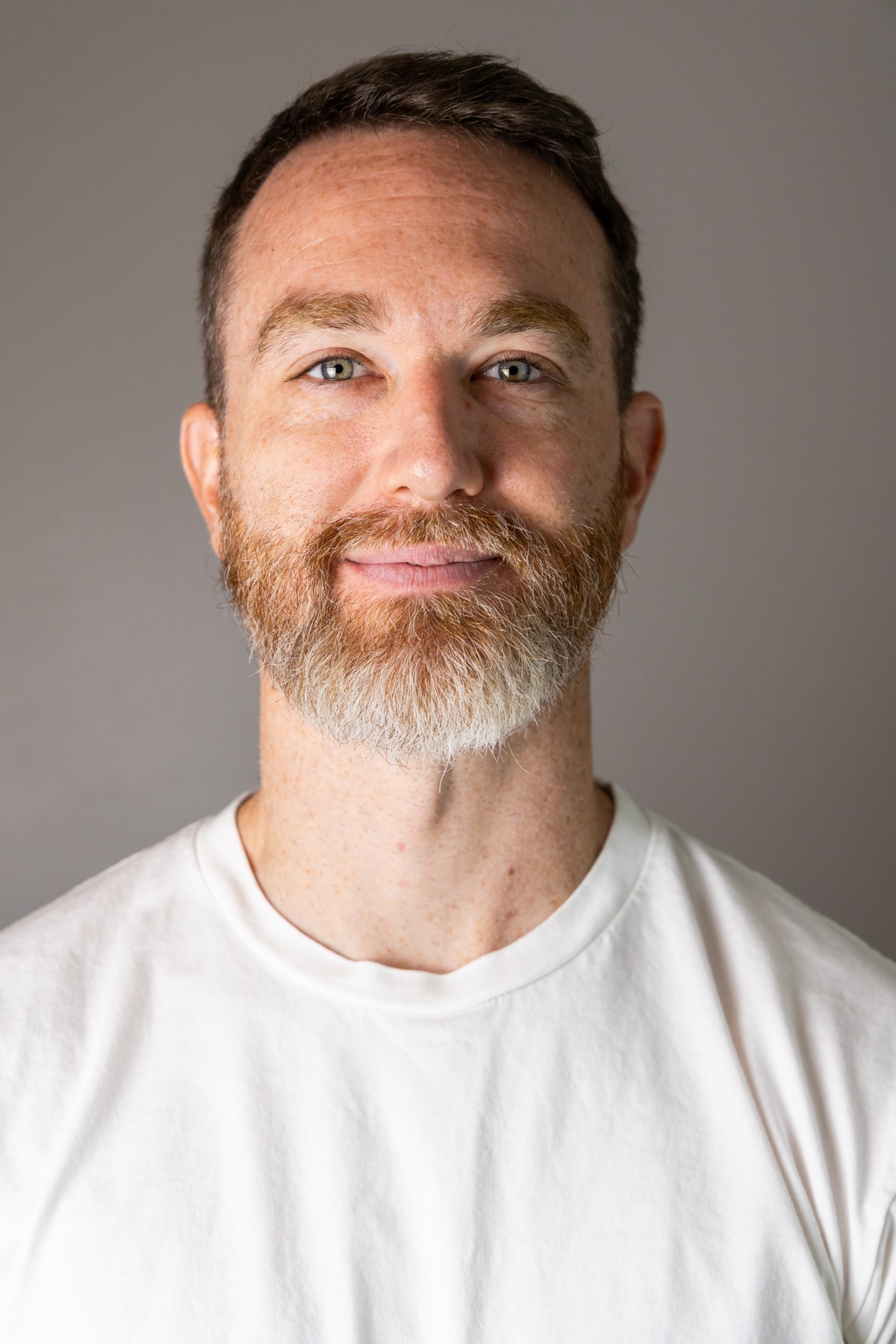
Hey, I’m Jason. Thanks for reading this and taking the time to get to know me a little bit. Just so you know, everything that you’re about to read was written by me, word for word, not by some AI model. I didn’t even have it do any kind of professional summary or anything like that. These are all my words because I want you to know that I value the human element, increasingly more in this era of AI.
So, how did all this start? Well, I was a child of the ’90s and grew up with very little. My dad was a pastor, and so we were living on a pastor’s salary. My mom didn’t work out of the home, but she definitely worked inside the home as she homeschooled all of my siblings and me.
I wouldn’t change anything about the way I was raised. I just want to tell you because it defines my worldview and how I approach things today.
Growing up without many options in regards to how we spent money definitely affected the way that I approached work later in life. But it also caused my dad to teach me a very strong work ethic from a very young age. He impressed upon me that working hard, and doing so with respect for others, would probably get me pretty far in life. He didn’t know it, but those teaching moments are what prompted me to scratch the itch of entrepreneurship.
I started cutting grass in my neighborhood around 7 or 8 years old, which is when I realized I was good at manual labor. The idea of working with my hands and doing something for myself was very appealing. I was able to envision the end result: take an overgrown landscape and apply my time and effort to it. This would result in a manicured lawn that my client was happy with. As a young kid, that meant something different than it does now. Then, they handed me a $20 bill or whatever it was, and I got to touch and hold the end result of my hard work. But that’s definitely what started my interest in being the fulfiller of a process, basically doing something myself and achieving a result that I was proud of. I liked the control of it all. I’m definitely a control freak, and so being able to manage something myself from start to finish and see a successful result excited me.
Turns out that I liked cutting grass more than I knew that I would, because at age 20, I started a landscape company called Green Horizon Landscaping and built a clientele of residential and commercial clients, roughly 65 accounts. On paper, I was making about $65,000 a year. That was in 2010. In today’s money, that’d be about $100,000. Not bad for a 20-year-old kid. But let’s not get ahead of ourselves here.
The day of my 15th birthday, I woke up and went to the DMV and took the driver’s permit test. I passed on my first try. Then I swung by the local Chick-fil-A and dropped off my application. I was eager to begin work because, as I said, I didn’t grow up with much money, and I wanted to begin making my own. Within a few weeks, I had an interview and was hired. As a 15-year-old, I could only work three hours a day. That was back in 2005. So my shift was from 3:00 P.M. to 6:00 P.M. three or four days a week, and then I would also work on Saturday. I was able to work full-time hours once I turned 16, which I applied for and was given. I was able to work myself up to what they called back then “team leader.” The one thing that I wish I had known then, as I do now: Money burned a hole in my pocket. I wasn’t great at saving. But at least then, I wasn’t going into debt for anything. I just didn’t really have a ton of savings.
Jump a couple years into the future, and I began working the summers outside building commercial playgrounds. This taught me an even greater level of work ethic, because I was working in the South Carolina summers, oftentimes in 90-degree days. Be sure that throughout the summer, around August and September, it would hit triple digits. This taught me a whole new meaning of hard work.
I graduated high school in 2008 and went directly into the local tech college. I really didn’t know what I wanted to study, but I was approved for financial aid. Going to school seemed like the most logical thing to do as a young 18-year-old kid. After a semester and a half, I sat down with my dad and said, “I’m really not interested in going to school. I don’t know what I want to do. I’ve already changed majors once, but I just really don’t like school. I’d rather be working and making money.” You see, all through these years, I had kept up my landscape skills, so I told my parents that I was going to begin a landscape business.
When I told my dad I didn’t want to do school anymore, he said, “Hey, that’s fine, but you can’t live here for free. So, I’ll give you a little bit of a runway, but if you’re not going to go to school, you have to pay rent.” “Okay,” I said. “Let’s do this.”
So I jumped in with both feet and didn’t look back. I started off with a Toyota 4Runner, a hitch attachment where I could strap my push mower on the back, and started driving around neighborhoods, handing out cards and flyers, asking if I could mow their lawns. I started off slow, which was smart, and also counter to my nature because I wanted to blow this thing up, because I was excited. But I went client by client, slowly stacking them up and making more money, which allowed me to invest in equipment. This meant upgrading to a truck, getting a utility trailer, a backpack blower, weed eater, edger, and all that.
But as success often does, it kind of went to my head, and I convinced myself that to get more clients, I needed to have more equipment.
And so I took out a loan for a zero-turn ride-on mower, top-of-the-line Walker GHS. It was amazing, and it cut the grass the way I wanted it to, but boy, was it expensive. At this point, the money I was making covered the loan as well as income for myself. But that wasn’t enough.
I started getting more clients and bigger jobs, which meant I needed help, so I hired an employee, and I took another loan out on a second zero-turn, a Snapper zero-turn. Still, that was $10K I didn’t have, so I paid the monthly installments on that as well.
To be honest, I was loving it. I was really good at my work. I was really good with my clients. I owned something that was mine and built by me. But when I took a hard look at the financials, I realized that I was not a businessman. I was a hard worker who could deliver a product. I was good at sales, but I was not good at money management.
So after two years, I sold my company and paid off all my debts to another local small business.
Part of my deal included staying on as their landscape manager, which I did for a year. I learned a lot in all of that. One of the points was a reconfirmation that working for “the man” was not what I wanted.
In 2013, I moved out of South Carolina to Minnesota, partly for a fresh start, partly for a reason that I look back on and laugh about. That reason was I had it in my head that I was going to go back to school. You might think I’m crazy, and you wouldn’t be wrong. Here’s a guy who left school to build a thing for himself, and now, a few years later, is returning. Well, yeah, that didn’t pan out either. I spent a year in the freezing cold of the Twin Cities of Minnesota and realized school wasn’t for me, and neither was the cold. Just as I made plans to move back, I met Suzy, my now-wife. We dated, got engaged, and were married in December of 2015.
The one thing that I will say changed my life was the jobs that I was able to hold while I was in Minnesota.
I cut my teeth in sales when I was a young kid, but then I took it to the next level by working in corporate America at some of the biggest companies. I worked at U.S. Bank as a banker. I worked for Comcast as a sales representative. I worked for Thomson Reuters as a territory sales manager. Although I was back to working for “the man,” I was honing skills that I was quite certain I would be able to employ later on in life, and I was right.
If you guessed that all through these years I was trying my hand at various entrepreneurial endeavors, you would be right. Probably my single greatest passion, aside from my family, is music. A second major event in 2010 was purchasing my first MacBook Pro. Not only had I grown up playing music, but now I had a machine that allowed me to produce music and create all kinds of things. I went crazy with it.
Fast-forward several years, and I continued to upgrade my MacBook Pro and kept making music.
After a friend of mine heard some of my earlier productions, he told me I should try my hand again, but this time with a more updated DAW. So I downloaded Ableton Live. Wow. Limitless possibilities, and boy, did I take advantage of them. And yes, as a side hustle, I tried to start licensing my music. It wasn’t that my music was bad. It was that I still didn’t understand business. Not to mention, I wasn’t making a ton of money, was newly married, and had a kid on the way. It felt like everything was against me, that’s for sure. If you want to dive into that rabbit hole, you can go check it out here.
Okay, let’s jump back to the early 2020s. My wife and I knew that it was time to begin thinking about moving back to my home state of South Carolina. My current employer, Thomson Reuters, told me that I would be able to take my job, which at that point was remote due to COVID. We got our house prepped for listing, put it on the market, and within a few weeks had a buyer. Around this time, a few days before we were scheduled to pack up our whole house and move across the country, my boss told me that my position was no longer eligible for fully remote work. They were going to enact a hybrid policy, which meant I had to be within driving distance of the office. Yeah, well, driving distance didn’t make a lot of sense when it was 1,200 miles. So, I sent in my resignation.
In 2021, we moved back to South Carolina, me with no job and no way to secure a loan for a house. We moved in with my parents into their attached suite. 500 whole square feet. Ha.
If you guessed that I picked up random side jobs and started cutting grass again, you would be right. Of course, I was looking for full-time employment, but I gravitated naturally to what I was good at. So, while looking for a job, I was able to secure a few clients cutting their grass.
But guess what? I was back to a push mower. Yep. And this time, there was no upgrading. I had learned my lesson.
Around 2019, a new itch formed, and that was the real estate investment itch. I scratched that itch by going to seminars, reading some books, and listening to some podcasts. Of course, I told my family that we had to start a real estate company. This was when I was still living in Minnesota, 1,200 miles away. Hey, we’ll make it work. When we move back…
They kind of laughed and said, “That’s just Jason being Jason.” Well, just a few years later, we had in fact moved back, and the book “Rich Dad Poor Dad” by Robert Kiyosaki was in my hands, and I was reading it ravenously. I couldn’t believe what I was reading, and quickly began reading other books, as well as the sequel to that book called “Cashflow Quadrant”. I felt like I was seeing things for the first time in my life, understanding how money worked, economics, investments, smart money moves, all of it. It was incredible. I ate it all up.
Book after book. Podcast ingestion happened in the evenings. My brother was in on it too.
After we had read X number of books and listened to so many hours of podcasts, we realized that we were either going to continue doing this, self-education, which I will say is very important, but also had its limits, or we were going to take action. We both decided we wanted to take action. We wanted a real estate rental company. So, we each took turns starting at various points and eventually met up and became official partners. Starting out as small business owners trying to jump directly into a rental portfolio is really hard to do, unless you have a cash cow that backs you. We had whatever the opposite of a cash cow is.
So, we started a flipping company: One Palmetto.
Technology has always intrigued me, and I consider myself a bit of a nerd and geek for all of that. I love Apple MacBook Pros. I love how technology works.
I always had the latest and greatest version of high-definition video and TVs before streaming became a thing. So when we began to use software for our real estate company, I was right there for it. I had used Salesforce when working for corporate America, so I was familiar with how it worked, and also how to jump in the backend and customize things for myself.
I can still remember where I was and who I was with when I heard about ChatGPT. My friends told me it was this app that was super smart and basically the new Google. As soon as I heard the two letters next to each other, “A and I,” I shook my head and said, “No, thanks.” Boy, how silly I was.
Today, I not only continue to run One Palmetto, but I have built all the tools that we use internally as well as externally. We now offer these tools publicly under the name 127 Foundry. The advancement of AI is incredible to me, and to be honest, I love it. But the thing that still scares me is how loosely people treat AI, handing it pretty much everything without guardrails. They also are removing the human element from the equation. You won’t find me doing that. One of my products’ taglines is, “The intersection of AI ingenuity and the human experience.” This is more critical today than most people are aware of. Moving the needle with AI requires a human being at the helm.
My companies put human beings first. Tools like Claude Code, ChatGPT, Codex, all of these frontier models are incredible, and I employ them on a daily basis. But what I don’t do in any of the businesses that I run is assume that AI can replace me or my team. In some instances and in some tasks, it can. But it does not have human intellect. It is not able to execute with deterministic logic. Those gifts are given only to human beings. That’s how we run 127 Foundry, and that’s how the tools I’ve built for One Palmetto approach automation and technology today.